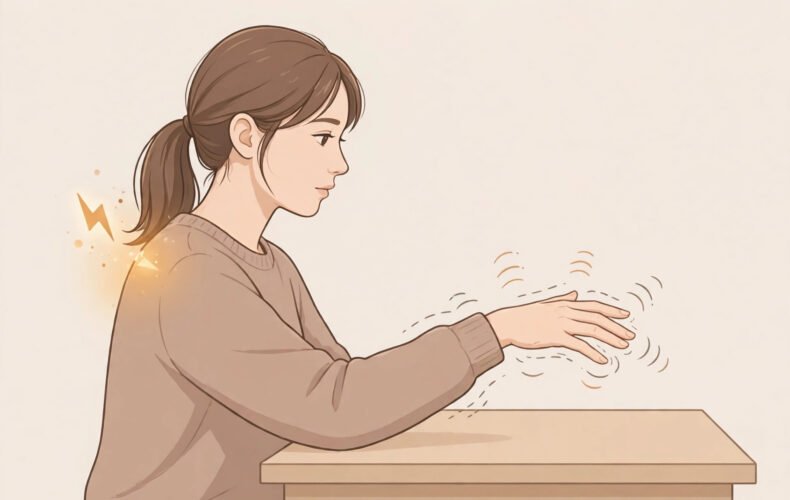
Why Your Hands Shake When You’re Nervous — The Adrenaline Explanation
Your hands are trembling before a presentation, a job interview, or even a difficult conversation. You try to hold a cup steady and the harder you try, the worse it gets. If you’ve ever wondered why your hands shake when you’re nervous, the short answer is adrenaline: your body is running an ancient survival program, and the tremor is a side effect of your muscles being loaded with energy they aren’t allowed to use.
Nervous hand shaking is nearly universal. It happens because your fight-or-flight response floods your muscles with blood, oxygen, and adrenaline to prepare for physical action — then, when you sit still and “be calm” instead of running or fighting, all that primed muscle energy leaks out as a fine tremor. The shake is uncomfortable, but it is your body doing exactly what it evolved to do.
What Is Actually Happening in Your Body When You’re Nervous?
The chain from “I’m nervous” to shaking hands follows a precise sequence, and understanding it makes the tremor much less frightening.
Step 1: Your brain flags a threat. The amygdala — the brain’s threat detector — decides the presentation, the test, or the confrontation counts as danger. It doesn’t distinguish well between a predator and public speaking; both trigger the same alarm.
Step 2: The sympathetic nervous system fires. Your brain signals the adrenal glands to release adrenaline (epinephrine) and noradrenaline into your bloodstream. Your heart rate climbs, breathing quickens, and blood is rerouted from digestion and skin toward your large muscles.
Step 3: Your muscles get over-primed. Adrenaline makes muscle fibers more excitable and responsive. Your hands, with their dense concentration of small motor units, are exquisitely sensitive to this change. When fine motor control meets a flood of stimulatory signals, the result is a rhythmic, involuntary tremor — typically 8 to 12 oscillations per second, the frequency of normal physiological tremor amplified by adrenaline.
Step 4: You’re sitting still. Here’s the part most people miss. Adrenaline is fuel. It is meant to be burned through movement. When you suppress movement — sitting in an interview chair, standing at a podium — the energy has nowhere to go. The muscle fibers stay taut and twitchy, and the tremor becomes visible.
This is why your hands shake most when you need them to be steady. The effort to hold still actively fights the body’s instruction to move, and the conflict shows up as shaking.
Why Does It Get Worse When You Try to Stop It?
Anyone who has ever tried to hide shaking hands knows the cruel feedback loop: you notice the tremor, you get embarrassed or frustrated, your nervous system reads that frustration as more threat, and more adrenaline arrives. The shake intensifies.
Physiologically, trying to force stillness engages opposing muscle groups simultaneously. Your forearm flexors and extensors both contract to lock the hand in place, and with adrenaline making every fiber twitchy, co-contracting muscles fight each other — producing a more visible, jerky tremor than if you had relaxed. This is the same reason stage performers often shake less once they start moving: movement gives the adrenaline somewhere to go.
What Makes Some People Shake More Than Others?
Not everyone trembles equally under pressure. Several factors dial the intensity up or down:
- Caffeine intake. Caffeine mimics and amplifies adrenaline’s effects at the muscle level. A double espresso before a stressful event stacks stimulant on stimulant, and hands that might have been steady will shake.
- Blood sugar. Low blood sugar triggers its own adrenaline release. Skipping breakfast before a stressful morning meeting gives you two adrenaline sources for the price of one.
- Sleep debt. Poor sleep lowers your threshold for activating the stress response. Tired brains sound the alarm faster and louder.
- Genetics and baseline anxiety. Some nervous systems are simply more reactive. People with a naturally high “physiological tremor” amplitude, or who live with anxiety, start closer to the visible-shaking line.
- Stimulant medications. ADHD medications, some asthma inhalers, and certain antidepressants can amplify tremor as a side effect. If shaking is new and persistent, it’s worth mentioning to your doctor.
None of these mean anything is wrong with you. They mean your nervous system is tuned the way evolution tuned it — alert, responsive, and ready to move.
How to Calm Shaking Hands When You’re Nervous
Because the tremor comes from adrenaline-loaded muscles held still, the most effective techniques either burn off the adrenaline or signal the nervous system to stand down.
1. Give the adrenaline a job (the 5-minute discharge)
Arrive a few minutes early and use your large muscles: walk briskly up a flight of stairs, do wall push-ups, or squeeze a stress ball hard for 30-second bursts. Large-muscle activity metabolizes adrenaline. This is the single most reliable intervention.
2. Slow your exhale (physiological sigh)
Take two short inhales through your nose, then one long, slow exhale through your mouth. Repeat three or four times. The extended exhale activates the vagus nerve and nudges your nervous system from fight-or-flight toward rest-and-digest. The long exhale is the active ingredient.
3. Warm your hands
Cold makes tremor more visible; adrenaline diverts blood away from your extremities, leaving hands cold and shaky. Run warm water over your hands or hold a warm cup for a minute. The warmth relaxes forearm muscles and improves blood flow.
4. Anchor your hands
Instead of hovering them in midair trying to be still — the worst position — rest your palms on the table, clasp your hands, or press a fingertip gently against your thumb. Contact with a stable surface damps the oscillation mechanically.
5. Fix the stacking factors before the event
On stressful days, eat a balanced meal (protein + complex carbs), cap caffeine at your normal amount or less, and get a full night’s sleep. Each factor you remove lowers the adrenaline floor the tremor builds on.
When Hand Shaking Is Something to Get Checked Out
Ordinary nervous shaking fades as the situation passes — usually within 20 to 60 minutes after the adrenaline clears. But a tremor deserves a doctor’s look when it changes pattern. Talk to your doctor if:
- Your hands shake at rest even when you’re calm and relaxed, not just under stress.
- The shaking started recently and is getting worse over weeks or months.
- It’s one-sided — a tremor that affects only one hand more than the other.
- It comes with other symptoms: stiffness, slowness of movement, trouble walking, voice changes, or unintended weight loss.
- It interferes with daily life — buttoning shirts, typing, eating, or drinking — even on calm days.
- It started after beginning a new medication or changing a dose.
These patterns can reflect causes beyond adrenaline — essential tremor, thyroid issues, medication effects, or (much less commonly) neurological conditions. A doctor can usually sort out the cause with a physical exam and basic labs. This article explains a common experience; it is not a diagnosis.
FAQ
Is it normal for my hands to shake when I’m nervous?
Yes — completely normal. An adrenaline-driven tremor under stress happens to nearly everyone. It reflects a healthy, responsive nervous system, not a weakness or a medical problem.
Why do my hands shake more when I try to hold them still?
Forcing stillness co-contracts opposing forearm muscles, and adrenaline makes every fiber twitchy, so the muscles visibly fight each other. Relaxing your grip and resting your hands on a surface reduces the shake faster than straining for control.
Can anxiety cause hand tremors even without an obvious trigger?
Yes. Generalized anxiety keeps baseline adrenaline elevated, so the threshold for visible shaking drops. If you notice tremor in situations that wouldn’t faze others, talk to a doctor about managing the anxiety itself, not just the shaking.
How long does nervous hand shaking last?
It typically fades within 20 to 60 minutes after the stressful situation ends, as adrenaline is metabolized. If your hands still shake hours later while you’re fully calm, mention it at your next checkup.
This article is for general information only and is not medical advice. If you’re concerned about hand tremors, talk to your doctor.